
Pre-Wedding Shoot: The Complete Guide for Indian Couples
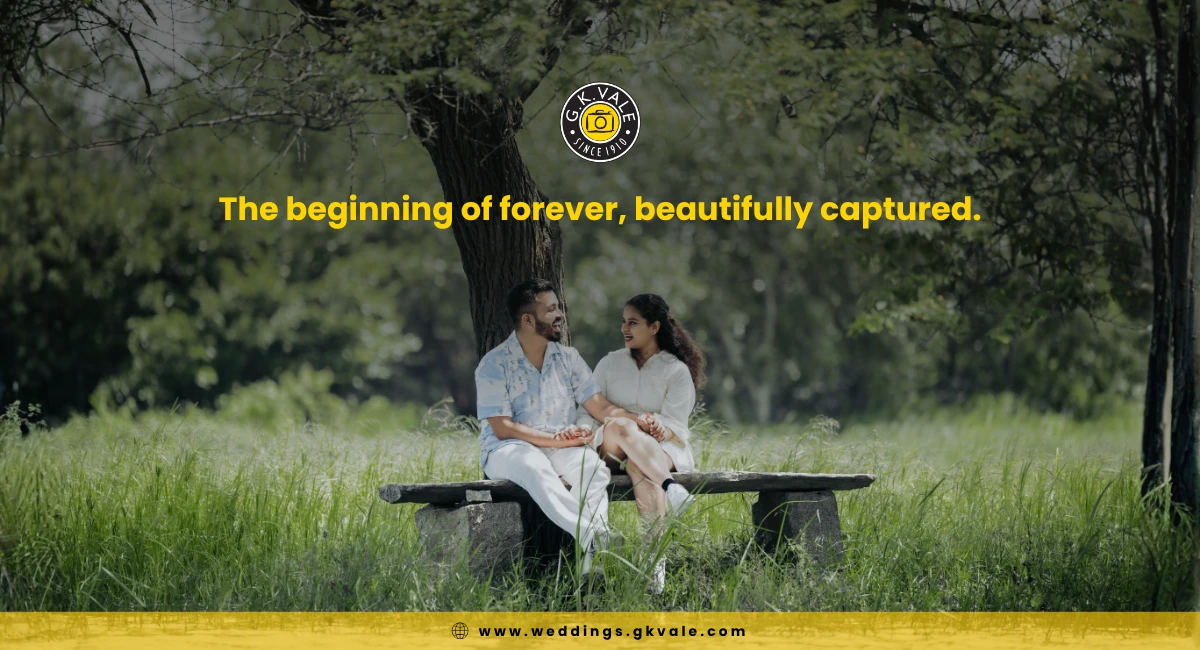
A pre-wedding shoot is a planned photo and film session before the wedding, usually three to six months ahead. Most Indian couples spend ₹15,000 to ₹50,000. It takes four to six hours across one or two locations. This guide covers cost, timing, locations, outfits and the permit rules almost nobody mentions.
Nearly every couple books one now. Very few plan one properly.
The result is predictable. Three locations crammed into a single day. Golden hour spent stuck in traffic on Old Airport Road. A location that turns out to need a permit nobody applied for. This guide is built to prevent all three.
What Is a Pre-Wedding Shoot?
A pre-wedding shoot is a dedicated photography and film session held before the wedding, typically three to six months in advance. It is not part of wedding-day coverage. Couples use the images for save-the-dates, invitations, social media and reception displays. Sessions usually run four to six hours across one or two locations.
The term covers a lot of ground. Some couples want relaxed portraits in everyday clothes. Others want a full themed production with wardrobe changes and a cinematic edit.
Both count. The difference is scope, and scope is what you are actually paying for.
One clarification worth making early. Engagement shoots and pre-wedding sessions are often the same thing in India. Studios use the terms interchangeably. What matters is what appears in the contract, not the label on it.
Why Couples Book a Pre-Wedding Shoot
The strongest practical reason is rehearsal. It lets you get comfortable in front of a camera months before the wedding, with your photographer, without three hundred relatives watching. Couples who do one are noticeably less stiff in their wedding-day portraits.
The usual reasons given are save-the-dates and social content. Those are real. However, they are not the most valuable outcome.
The real return is familiarity. Most people have never been photographed properly. On the wedding day, that inexperience shows in the shoulders and the jaw. A session beforehand removes it.
It also tells you whether your photographer is a good fit while you can still change your mind. That alone justifies the spend for many couples.
When it is not worth it
Balanced advice matters more than a sales pitch, so here is the other side.
- Your budget is tight and photography is already stretched. Put the money into wedding-day crew instead.
- Your wedding is under eight weeks away. There is no time to plan it well.
- You both actively dislike being photographed and are only doing it because everyone else did.
- You want it purely for one Instagram post. That is an expensive post.
A session booked reluctantly looks reluctant. The camera picks that up every time.
How Much Does a Pre-Wedding Shoot Cost?
A pre-wedding shoot in India typically costs ₹15,000 to ₹50,000 as a standalone booking. Simple half-day sessions start near ₹10,000. Full-day cinematic shoots with multiple locations and a film crew reach ₹70,000 and beyond. Location permits, travel and drone coverage are usually charged on top.
| Tier | Typical cost | What it includes |
|---|---|---|
| Simple | ₹10,000 – ₹20,000 | Half day, one photographer, one location, one or two looks, 40–60 edited images |
| Standard | ₹20,000 – ₹40,000 | Full day, photographer plus assistant, two locations, two to three looks, 70–120 images, short reel |
| Cinematic | ₹40,000 – ₹70,000 | Photographer and cinematographer, styled concept, lighting, edited film of 1–3 minutes |
| Destination | ₹70,000+ | Outstation location, crew travel and stay, multi-day schedule |
Compiled from published 2026 Indian pricing pages. Treat as market bands, not fixed rates.
Costs that sit outside the quoted figure:
- Location permits and venue fees, from a few hundred rupees to ₹35,000 at heritage properties
- Drone coverage, commonly ₹5,000 to ₹15,000
- A separately edited Instagram reel, roughly ₹3,000 to ₹10,000
- Hair, makeup and styling, which is a separate vendor entirely
- Outstation travel and accommodation for the crew
- GST
Bundling helps here. When the session is added to wedding coverage at booking, it is almost always cheaper than commissioning it separately later. For how this sits inside your total spend, see our Bangalore wedding photography cost guide.
When Should You Do Your Pre-Wedding Shoot?
Schedule the session three to six months before the wedding. That leaves time to receive and use the images for save-the-dates and invitations, while keeping you clear of the final two months when every other vendor needs your attention.
Three practical constraints decide the date.
Delivery time
Editing takes two to four weeks. If you want the images on a printed invitation, work backwards from the printing deadline, not the wedding date.
Weather
Avoid Bengaluru between June and September. The monsoon does not politely wait for your window. October to February gives the cleanest light and the most reliable mornings.
Light
Shoot at the edges of the day. Roughly 6:00 to 8:30 in the morning, or the ninety minutes before sunset. Midday sun in this city produces hard shadows under the eyes that no amount of editing fixes properly.
Weekdays are also considerably quieter than weekends at every popular location — reportedly 60 to 70% less crowded from Tuesday to Thursday. Take the leave day. It shows in the frames.
Pre-Wedding Shoot Locations and the Permit Problem
Most public locations in Bangalore now require permission for professional photography, and rules change without notice. Lalbagh and Cubbon Park have been subject to restrictions on professional cameras, tripods and reflectors. Always confirm current permissions with the authority before booking a date around any public location.
Read this before you shortlist anywhere. Nearly every "best pre-wedding shoot locations in Bangalore" listicle still recommends Lalbagh and Cubbon Park at the top. The Horticulture Department has restricted professional shoots at both, banning professional cameras, flashlights, reflectors and tripods. Reporting since then has been contradictory — some guides quote permit fees, others describe an outright ban, and couples on the ground report inconsistent enforcement at the gate.
The practical position: do not plan a shoot around a public park without written permission in hand. Confirm directly with the Horticulture Department or the venue authority in the same month you shoot. Rules that were true last season may not be true now.
This is why experienced studios push couples toward private venues. Not to upsell — to remove the risk of a crew, a couple and a stylist arriving to find the gate closed.
Choosing well, wherever you go
- One location per day. Two at absolute most. Travel between locations eats the light, and tired faces photograph tired.
- Recce it first. Images online are often two or three years old. Trees fall. Signage appears. Construction starts.
- Book the light, not the coordinates. The best location at the wrong hour is unusable.
- Match the location to the wardrobe. A Banarasi against heritage stone works. A tuxedo in a botanical garden does not.
- Allow 30 minutes minimum between outfit changes. Couples always underestimate this.
- Check drone rules separately. Public spaces frequently prohibit them even where photography is allowed.
Heritage properties and private estates charge for access, sometimes substantially, but they give you a confirmed slot and no argument at the entrance. Reported photography charges at Bangalore Palace, for instance, have ranged from ₹5,000 to ₹35,000 depending on scope — another figure to verify directly rather than trust a blog on.
Within a few hours of the city, Nandi Hills, Coorg, Hampi and Mysuru all work beautifully. Nandi Hills in particular rewards a pre-sunrise arrival, around 5:45 to 7:00, when the mist is still sitting in the valley. You can see how different locations read on camera in our wedding and couple photography gallery.
What to Wear for a Pre-Wedding Shoot
Choose two to three outfits at most: one traditional, one contemporary, and optionally one casual. Favour solid colours and deep tones over busy prints and logos. Avoid pure white and neon, both of which are difficult to expose alongside skin tones. Comfort matters more than couples expect across a five-hour session.
A few rules that consistently hold.
- Coordinate, do not match. Identical outfits date badly. Complementary tones age well.
- Deep and muted colours photograph better than bright synthetics, especially in Indian daylight.
- Movement is your friend. A saree pallu or a flowing skirt gives the camera something alive to work with. Stiff fabric gives it nothing.
- Break the outfits in. New footwear ends a session an hour early.
- Carry a steamer. Creases are the single most common retouching request, and they are avoidable.
If a saree or lehenga is on the list, plan it for the first slot. Draping takes time, and you want that outfit shot while the morning light is still soft.
Candid, Themed or Traditional: Which Style Suits You?
Candid sessions capture unposed interaction and suit couples who are uncomfortable performing. Themed shoots build a concept with props, wardrobe and location. Traditional shoots use directed poses and formal framing. Most sessions blend at least two, which is usually the right answer.
| Style | Best for | Not ideal for | Planning load |
|---|---|---|---|
| Candid | Couples who freeze when posed; natural, story-led albums | Anyone wanting a specific recreated image | Low |
| Themed | Strong visual concepts, retro or cinematic looks, standout reels | Short timelines and tight budgets | High |
| Traditional | Formal portraits for family, framing and print | Couples wanting a relaxed feel | Low |
| Cinematic film | Reception screening, save-the-date video | Photo-only budgets | Medium to high |
Candid is the most commonly requested style now, and the most commonly misunderstood. Candid does not mean the photographer stands back and hopes. It means they direct the situation rather than the pose — giving you something to do instead of somewhere to stand.
How a Pre-Wedding Shoot Day Actually Runs
A typical session runs four to six hours. Hair and makeup take 90 to 120 minutes before the first frame. Each outfit needs roughly 60 to 90 minutes of shooting, plus 30 minutes to change. Golden hour is protected for the strongest images of the day.
- Two weeks before. Confirm the location, permits, outfits and call time. Share a reference folder with your photographer — five images, not fifty.
- Day before. Steam everything. Charge phones. Sleep. Tired eyes are visible in every frame and cost hours in retouching.
- Makeup, 90–120 minutes. Start earlier than feels necessary. This is where schedules slip.
- First look, 60–90 minutes. Best light of the morning. Traditional outfit usually goes here.
- Change and reset, 30 minutes. Eat something. Genuinely.
- Second look, 60–90 minutes. Contemporary or casual.
- Golden hour, final 60 minutes. Non-negotiable. Everything else moves around this.
Notice what is missing: a third location. There is no room for one. Any studio promising three locations plus three outfits in a single day is promising you a rushed day.
Mistakes That Ruin a Pre-Wedding Shoot
The most common failures are overpacking the schedule, ignoring location permissions, booking midday light, and copying a reference gallery too literally. Each one is avoidable at the planning stage and impossible to fix afterwards.
- Three locations in one day. The single most frequent mistake. You will lose the light in transit.
- Assuming a public location is fine. Covered above. Get it in writing.
- Booking 11am because it was convenient. Harsh overhead sun, squinting, unflattering shadows.
- Sending fifty reference images. It produces a copy of someone else's shoot rather than yours. Five is plenty.
- Skipping the recce. The lake in that photo may now have a fence around it.
- Booking makeup for the wrong time. Ninety minutes minimum, and it always runs over.
- Not eating. Five hours on an empty stomach shows on faces by hour three.
- Choosing on price alone. The same trap that catches couples on wedding coverage — our guide on choosing the right wedding photographer applies equally here.
What You Receive, and When
Expect 50 to 120 fully edited images from a standard session, delivered in two to four weeks. Sneak peeks usually arrive within three to five days. A cinematic film adds another two to three weeks. Raw files are almost never included.
- Sneak peeks: 5–10 images within three to five days
- Full gallery: 50–120 edited images in two to four weeks
- Reel or short film: a further two to three weeks
- Print files: high-resolution versions for invitations and save-the-dates
- Not included: raw files, unlimited re-edits, and usually a physical album
Confirm three things in writing before you pay: the number of edited images, the delivery window, and how many retouching revisions are covered. Vagueness on any of the three is where disputes start.
How GK Vale Runs a Pre-Wedding Shoot
GK Vale plans every session around light and permissions first, then wardrobe and concept. Location clearances are handled before the date is confirmed, so no couple arrives to find a gate shut. Editing is done by our in-house team rather than outsourced.
We have photographed Indian families since 1910, and over 110 years the lesson has held: the sessions that go well are the ones planned backwards from the light.
So we start with sunrise and sunset times for your date, work out how many looks genuinely fit, and only then discuss locations. Permits are confirmed before the booking is closed.
Every pre-wedding shoot is unique, from the location and duration to the style and coverage you need. Tell us what you have in mind, and our team will create a package and quote tailored to your plans.
You can see the full list on our photography services page, browse recent couple work in the gallery, or read about the studio's history since 1910.
Key Takeaways
- A pre-wedding shoot costs ₹15,000 to ₹50,000 for most Indian couples.
- Book it three to six months before the wedding, not in the final eight weeks.
- Confirm location permissions in writing — public park rules in Bangalore have changed and enforcement is inconsistent.
- One location per day. Two at the very most.
- Shoot at the edges of the day and protect golden hour.
- Two to three outfits, coordinated rather than matching.
- Expect 50 to 120 edited images in two to four weeks.
- Bundling with wedding coverage costs less than booking separately.
Frequently Asked Questions
What is the meaning of a pre-wedding shoot?
It is a planned photography and film session held before the wedding day, separate from wedding coverage. Couples use the images for save-the-date cards, invitations, social media and reception displays. In India the term is used interchangeably with engagement shoot, and sessions typically run four to six hours across one or two locations.
How much does a pre-wedding shoot cost in India?
Most couples spend ₹15,000 to ₹50,000 for a standalone session. Simple half-day shoots start near ₹10,000, while full-day cinematic sessions with a film crew reach ₹70,000 and above. Location permits, drone coverage, hair and makeup, crew travel and GST are usually charged separately, so ask for an all-inclusive figure before comparing quotes.
How many months before the wedding should a pre-wedding shoot be done?
Three to six months ahead works best. Editing takes two to four weeks, so this leaves time to use the images on save-the-dates and invitations. It also keeps the session clear of the final two months, when venue, catering and guest logistics take over. If invitations are being printed, work backwards from the printer's deadline.
Do I need permission for a pre-wedding shoot in Bangalore parks?
Yes, in most cases. The Horticulture Department has restricted professional photography in Lalbagh and Cubbon Park, including professional cameras, tripods, flashlights and reflectors. Reports on current rules and fees conflict, and enforcement varies. Always confirm permission directly with the relevant authority in the same month you plan to shoot, and get it in writing.
How long does a pre-wedding session take?
Four to six hours of shooting is standard, plus 90 to 120 minutes beforehand for hair and makeup. Each outfit needs roughly 60 to 90 minutes in front of the camera and 30 minutes to change. A realistic day covers one location and two or three looks. Anyone promising three locations in a day is promising a rushed session.
Is a pre-wedding shoot really necessary?
It is optional, not essential. The strongest argument for one is rehearsal: it makes you comfortable with your photographer months before the wedding, which visibly improves your wedding-day portraits. However, if your budget is tight, spending that money on additional wedding-day crew usually produces more value than a separate session.
What is the best time of day to shoot?
Early morning, roughly 6:00 to 8:30, or the ninety minutes before sunset. Both give soft directional light that flatters skin tones. Midday sun creates hard shadows under the eyes that editing cannot properly correct. Weekdays are also far quieter than weekends at popular locations, which matters more than most couples expect.
How many outfits should we carry?
Two to three at most. A typical plan is one traditional outfit, one contemporary and optionally one casual. Each change costs about 30 minutes of shooting time, so a fourth outfit usually means less usable work overall. Favour solid, deeper colours over busy prints, and avoid pure white and neon shades.
What is a candid pre-wedding shoot?
A candid session captures natural interaction rather than directed poses. The photographer sets up situations and prompts rather than positioning your hands. It suits couples who feel awkward posing. Candid does not mean the photographer stands back passively — good candid work involves constant, invisible direction of the environment and the moment.
Can we do the session at a destination?
Yes, and Coorg, Hampi, Mysuru and Nandi Hills are all within reach of Bangalore. Budget for crew travel, accommodation and an extra day in the schedule. Destination sessions typically start around ₹70,000 once logistics are included. Confirm location permissions in advance, since heritage sites often charge separate photography fees.
How many photos will we get?
Between 50 and 120 fully edited images for a standard session, depending on hours and number of looks. Sneak peeks arrive within three to five days and the full gallery in two to four weeks. Raw or unedited files are almost never included, and the number of retouching revisions should be confirmed in writing before booking.
Is the session included in wedding photography packages?
Sometimes, usually at premium tiers. Bundled sessions are often shorter than standalone ones, so check the included hours, number of looks and whether travel is covered. Adding it at the time of booking wedding coverage is almost always cheaper than commissioning it separately later, when it is priced as an independent job.
Should we hire a makeup artist?
Professional makeup is strongly recommended, particularly for the traditional outfit. Camera lighting is unforgiving in a way that mirrors are not. Book the artist for 90 to 120 minutes before your call time and expect it to run over. Makeup is a separate vendor and is not part of a photography quote unless stated.
Are drones allowed?
It depends entirely on the location. Public parks and government properties frequently prohibit drones even where photography is permitted, and airspace restrictions apply near airports and defence installations. Private venues and estates are usually more accommodating. Drone coverage typically adds ₹5,000 to ₹15,000 to a session and should be cleared in advance.
What happens if it rains on the day?
Reputable studios build a reschedule clause into the contract for weather. Confirm before booking whether a postponement is free and how much notice is required. Avoid scheduling between June and September in Bengaluru, when monsoon conditions make cancellation likely. October to February offers the most dependable mornings for outdoor sessions.
Planning Yours
A good pre-wedding shoot is not the one with the most locations or the biggest budget. It is the one that was planned backwards from the light and confirmed with the venue in writing.
So start there. Pick a date three to six months out, in October to February if you can. Choose one location and confirm you are allowed to shoot in it. Pick two outfits. Protect golden hour. Then let the photographer do the rest.
Everything else — the props, the concept, the reel — is decoration on top of those four decisions. Get them right and almost any concept works. Get them wrong and no concept saves the day.
Get a Pre-Wedding Shoot Quote Tell us your wedding date and we will send back sunrise and sunset times, a realistic schedule, and an itemised quote with permits and travel listed separately.
Follow G.K. Vale on Instagram Get inspired by real couples, locations and moments captured by the G.K. Vale wedding photography team.