
Choose the Right Wedding Photographer: The Complete Guide
Your wedding lasts a day. Your photographs last a lifetime.
You'll forget the exact taste of the wedding cake. You'll forget which uncle gave which speech. But you will look at your wedding photos for the rest of your life. Out of every vendor you hire for your big day, your photographer is the one whose work actually outlives the day itself.
And yet most couples spend more time picking a caterer than they do picking the person responsible for their memories.
So let's fix that. Here's everything you actually need to know before you book a wedding photographer — no fluff, no jargon, just the questions that matter.
Why This One Decision Deserves Extra Thought
Think about it this way: the flowers wilt, the food gets eaten, the outfits go into storage. Your photographs are the only part of your wedding that gets better with age. Twenty years from now, they'll be what your kids flip through on a rainy afternoon.
That's not meant to stress you out. It's meant to explain why "just find someone available on the date" is the wrong approach — and why a little bit of homework now saves you from a lifetime of "I wish we'd picked someone else."
The Main Wedding Photography Styles, in Plain English
Every photographer will use some version of these words. Here's what they actually mean.
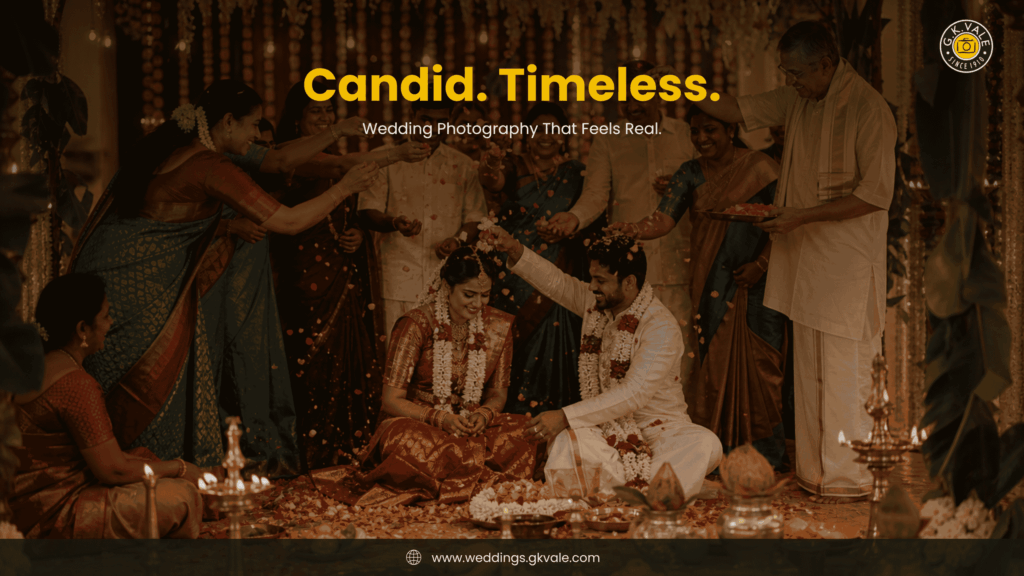
Candid photography is the art of capturing moments as they happen — nobody's posing, nobody's looking at the camera, and the best shots often happen when people don't even know they're being photographed. Your grandmother laughing at something, your partner's face the second they see you — that's candid work.
Traditional photography is the classic, posed style — families lined up, the couple looking straight into the lens, formal portraits by the mandap or altar. It's structured, it's timeless, and honestly, most weddings need a healthy mix of this and candid.
Cinematic wedding films treat your wedding video like a short film — moody colour grading, voiceovers, music cues, the works. If you've ever watched a wedding video and thought "that looked like a movie trailer," that's cinematic.
Fine-art or editorial style leans into composition and lighting the way a magazine shoot would — think dreamy, intentional, almost painterly images.
Most couples end up wanting a blend — candid for the emotion, traditional for the family portraits everyone will actually want printed. At GK Vale Weddings, that mix of candid photography, cinematic films, and traditional coverage is exactly what we've built our approach around — because no single style tells the whole story of a wedding day.
So, What Does a Wedding Photographer Actually Cost?
This is the question nobody wants to ask out loud, so let's just answer it.
Pricing depends on a few honest factors:
- Hours of coverage — a half-day shoot costs less than full-day, start-to-finish coverage
- Number of shooters — one photographer vs. a photographer-plus-second-shooter team
- Deliverables — raw files only, or a fully edited album, or both
- Add-ons — drone shots, a pre-wedding shoot, same-day edits, a wedding film on top of stills
A good package should spell out exactly what you're getting: number of hours, number of edited photos, whether an album is included, and turnaround time. If a quote feels vague, that's usually a sign the deliverables haven't been thought through either.
How to Actually Choose the Right Photographer (Step by Step)
- Figure out your style before you start browsing. Scroll through a few real weddings (not just highlight reels) and notice what you're drawn to — soft candid moments, dramatic posed shots, cinematic drone footage. This narrows your search fast.
- Look at full galleries, not just the best nine photos on Instagram. Anyone can post nine great shots. Ask to see a full wedding gallery from start to finish. That's where you'll see consistency — or the lack of it.
- Read reviews, and actually call a past client if you can. A five-minute conversation with someone who's already been through the process will tell you more than fifty Google reviews.
- Meet them — in person or on a call. You'll be spending your entire wedding day with this person, often more time than you spend with your own family. If the conversation feels stiff or rushed, that's worth noticing now.
- Ask the right questions. (List below.)
- Get everything in writing. Deliverables, timelines, backup plans, payment schedule — all of it should be in a contract, not a WhatsApp message.
- Book early. Good photographers get booked out six to twelve months in advance, sometimes longer during peak wedding season. If you've found the right fit, don't wait.
12 Questions to Ask Before You Book
- Can I see a full gallery from a recent wedding, start to finish?
- Will you personally be shooting our wedding, or is it a team?
- What happens if you're sick or unavailable on the day?
- How many hours of coverage are included, and what happens if we run over?
- How many edited photos will we receive, and how long will it take?
- Do you shoot both candid and traditional styles?
- Is a second shooter included, or is that an add-on?
- What's your backup plan if your camera or gear fails mid-shoot?
- Do you offer a pre-wedding shoot, and is it priced separately?
- Will we receive raw, unedited files as well?
- Is an album included, or is that extra?
- What's the payment schedule, and what's your cancellation policy?
Any photographer worth hiring will answer these without hesitation. If you're getting vague answers, keep looking.
Red Flags Worth Noticing
- No written contract, or a contract that's missing key deliverables
- A portfolio that only ever shows the same three or four "perfect" shots, never a full gallery
- No backup plan for gear failure or a second shooter
- Pricing that keeps changing every time you ask
- Reluctance to share references or past client contacts
None of these are dealbreakers on their own, but two or more together should make you pause.
What Kind of Equipment Should They Actually Be Using?
You don't need to become a camera expert overnight, but it's fair to ask what gear your photographer shoots on — a professional should be working with proper DSLR or mirrorless bodies, multiple lenses for different lighting conditions, and backup equipment in case something fails mid-ceremony.
If you're curious what that gear actually looks like (or if a photographer friend of yours is helping out and needs equipment for the day), GK Vale Camera Sales stocks the same Canon, Sony, and Nikon bodies professionals shoot weddings on, and GK Vale Camera Rentals is a solid option if you'd rather rent gear for a single day than buy it outright.
Why Experience and Legacy Actually Matter Here
Anyone can buy a good camera. What you can't buy is the instinct that comes from having photographed thousands of weddings — knowing where to stand during the ring exchange, recognising the moment before it happens, staying calm when the schedule falls apart (it always does, a little).
That instinct is exactly what a hundred years in this business teaches you. GK Vale has been photographing life's biggest moments since 1910 — through changing fashions, changing technology, and generations of the same families coming back to us for their weddings, their children's weddings, and everything in between. That kind of experience shows up in the photos, even if you can't quite put your finger on why.
Key Takeaways
- Your photographer is the one vendor whose work you'll still be looking at in twenty years — choose accordingly.
- Understand the difference between candid, traditional, cinematic, and fine-art styles before you start comparing photographers.
- Cost depends on hours, number of shooters, and deliverables — a vague quote usually means vague deliverables too.
- Full galleries tell you more than highlight reels. Always ask to see one.
- Get everything in writing, and book six to twelve months ahead if you can.
- Experience isn't just a nice-to-have — it's what keeps a photographer calm and ready when your wedding day inevitably doesn't go exactly to plan.
Frequently Asked Questions
How much does a wedding photographer cost?
It depends on hours of coverage, number of shooters, and what’s included in your package — from stills-only coverage to a full package with albums, films, and a pre-wedding shoot. Always ask for an itemised breakdown so you know exactly what you’re paying for.
What's the difference between candid and traditional wedding photography?
Candid captures real, unposed moments as they happen. Traditional is the structured, posed portrait style — family lineups, formal couple shots. Most weddings benefit from a mix of both.
How many hours of coverage do I actually need?
For most weddings, full-day coverage (ceremony through reception) captures the moments people actually want. Smaller or single-event weddings can often work with half-day coverage.
How far in advance should I book my wedding photographer?
Six to twelve months is standard, and longer if your wedding falls during peak season. Good photographers get booked up fast.
What should be included in a wedding photography package?
At minimum: agreed hours of coverage, number of edited photos, delivery timeline, and clarity on whether an album or raw files are included.
Should I hire one photographer for both stills and video, or two separate people?
Some photographers offer both under one roof; others specialise in just one. Ask directly — a specialist team of two is sometimes worth it if both stills and cinematic film matter equally to you.
Ready to start planning what your own wedding photography could look like?